 Part of Canadian Homes Since 1976
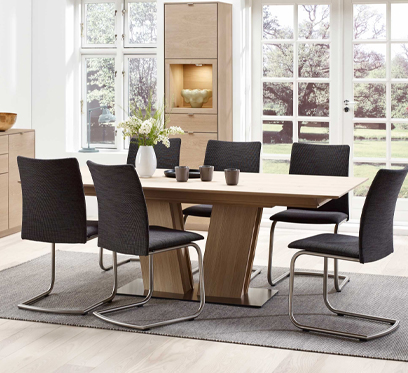
How to Choose Dining Chairs for a Round Table: Styles, Materials & Pairings
Last updated: April 17, 2026
Choosing dining chairs for a round table comes down to three things: the right number of chairs for your table's diameter, a style that complements your table's material and finish, and seats that are comfortable enough for how you actually use the space. This guide covers all three — with specific pairings for oak, glass, and live-edge round tables, plus a sizing chart so you never overcrowd your table.
How Many Chairs Fit a Round Table?
The number of chairs your round table can hold depends on its diameter. A good rule of thumb is to allow 24 inches of table edge per person for comfortable seating. Chairs with arms or wider seats need 26–28 inches each.
| Table Diameter | Comfortable Seating | Maximum (tight fit) | Best For |
|---|---|---|---|
| 36" (91 cm) | 2–3 chairs | 4 chairs | Small kitchen, breakfast nook |
| 42" (107 cm) | 4 chairs | 4–5 chairs | Compact dining room, apartment |
| 48" (122 cm) | 4–5 chairs | 6 chairs | Standard dining room |
| 54" (137 cm) | 6 chairs | 7 chairs | Family dining room |
| 60" (152 cm) | 6–8 chairs | 8 chairs | Larger dining rooms, entertaining |
| 72" (183 cm) | 8–10 chairs | 10 chairs | Large dining rooms, open-plan |
Tip: If you use armchairs, go with the lower number — armrests add 3–4 inches per seat and can make tight arrangements feel cramped.
How to Choose Dining Chairs for a Round Table: 5 Key Factors
Round tables have different requirements than rectangular ones. Because everyone sits facing the centre equally, there's no "head of the table" — which means each chair contributes equally to the look and feel of the space. Here's what to evaluate before you buy:
1. Chair Width vs. Table Circumference
Measure your table's circumference (diameter × 3.14) and divide by the number of chairs you want. Each chair should have at least 6 inches of breathing room on either side. A 48-inch round table has roughly 150 inches of circumference — enough for 6 chairs at 25 inches each, but tight for armchairs at 28 inches each.
2. Seat Height and Table Height
Standard dining tables sit at 29–30 inches tall. Your chair's seat should be 17–19 inches from the floor, leaving 10–12 inches of "knee clearance" between seat and table. For kitchen tables that sit slightly lower (28 inches), look for chairs with a seat height of 16–18 inches.
3. Leg Clearance for a Pedestal Table
Round tables often have a single pedestal base rather than four legs — which is one reason they pair so well with round tables in smaller rooms (no corner legs to navigate). For pedestal tables, almost any chair style works. For four-legged round tables, verify that your chairs' legs don't clash with the table legs at each corner.
4. Visual Weight and Proportion
Light, open-frame chairs (wire, acrylic, or slender wood) keep a round table feeling airy. Heavy, solid-back chairs can make a round table feel boxed in. As a general rule: the smaller the table, the lighter the chair's visual weight should be.
5. How You Use the Space
Long dinner parties call for cushioned, upholstered seats. Quick weekday meals do fine with wood or metal. If your table doubles as a workspace or homework spot, choose chairs that store easily and don't take up space when pushed in.
Dining Chair Materials for Round Tables
The material you choose affects durability, comfort, and how easily a chair pairs with different table finishes.
Wood Dining Chairs
Solid wood chairs are the most versatile choice for a round table. They work with nearly every table finish — from natural oak to painted surfaces — and age well with daily use. Look for beech, oak, or ash frames for strength without excessive weight.
Wood chairs are the one material that works with almost any table — which also means they're the easiest choice to get slightly wrong. The risk isn't clashing; it's landing in that awkward near-match zone where the chair wood and table wood are close but not the same. If you're going wood-on-wood, either match the species deliberately or go far enough apart that the contrast reads as intentional.
Maintenance: Wipe clean with a damp cloth. Avoid prolonged exposure to direct sunlight, which fades wood finishes over time.
Upholstered Dining Chairs
Upholstered dining chairs with fabric or leather seats add comfort for longer meals and a softer look that balances the hard lines of a wooden or glass table. Performance fabrics (bouclé, stain-resistant weaves) are increasingly popular for households with kids.
Best match: Glass-top tables, where the soft fabric contrasts with the hard surface; also great with modern round tables for a warmer feel.
Maintenance: Check the fabric rating — look for 30,000+ double rubs for everyday dining use.
Metal Dining Chairs
Metal-frame chairs — whether powder-coated steel or brushed brass — are lightweight, stackable, and very easy to clean. They suit modern and industrial-style round tables. Pair a black metal frame with a dark walnut table for a moody, contemporary look, or go brushed gold with a white marble-effect surface for something warmer.
Best match: Modern round tables, glass-top round tables, marble-effect surfaces.
Maintenance: Powder coating resists rust and chips. Wipe with a damp cloth.
Natural Fibre Chairs (Rattan, Wicker, Cane)
Rattan and cane chairs are having a long moment right now - and for good reason. They're lighter than solid wood, they age visibly in a way that looks intentional rather than worn, and they work especially well in the kind of West Coast home aesthetic that's common in BC: warm wood floors, lots of natural light, indoor plants.
Best match: Oak round tables, natural wood surfaces, boho and coastal-style dining rooms.
Maintenance: Dust regularly and keep out of direct humidity. Not ideal for households with very young children.
Chair Styles That Work Well With Round Tables
Side Chairs (Armless)
Side chairs — armless dining chairs — are the most practical choice for most round tables. They tuck under completely when not in use, take up less space at the table edge, and are easy to move. If you're unsure where to start, four matching side chairs around a 48-inch round table is the most versatile combination.
Armchairs
Armchairs at a round table work best when used consistently around the full perimeter — not just at "the head" (round tables don't have one). A set of four matching armchairs around a 54–60-inch round table creates a lounge-like, luxurious feel. Avoid mixing one or two armchairs with side chairs unless the size difference is minimal, as it creates an uneven silhouette around a round table.
Round-Back and Barrel Chairs
Chairs with a curved or barrel back echo the round shape of the table and create a cohesive, intentional look. This style is particularly effective with round pedestal tables. The curved back naturally follows the table's edge, making the whole arrangement feel like a complete composition rather than chairs placed around a table.
Ghost and Acrylic Chairs
Transparent acrylic chairs (often called ghost chairs) are ideal for small dining rooms where a round table needs to feel open. Because they're visually lightweight, you can fit more chairs without the room feeling crowded — a practical trick for apartments and compact dining spaces.
How to Match Chairs to Your Round Table Type
Chairs for an Oak Round Table
Oak has a warm, honey-to-amber grain that pairs beautifully with both matching oak chairs (for a cohesive Scandinavian look) and contrasting upholstered chairs in cream, sage, or dark navy. If you want to contrast: go darker on the chair seat and lighter on the frame. Black metal chairs with an oak table is a popular, high-contrast modern pairing.
Avoid: Yellow-toned wood chairs next to a golden oak — they compete rather than complement. Instead, choose a cooler-toned wood (like beech or grey-washed oak) or switch materials entirely.
Chairs for a Glass Round Table
Glass tables are transparent by design, which means the chairs become the visual centrepiece. For a minimal look, ghost chairs or slender metal frames let the base of the table remain the focal point. For warmth, upholstered chairs in textured fabric add contrast without competing with the glass. Avoid heavy, solid-back wood chairs — they block the table's visual lightness.
Chairs for a Live Edge Round Table
Live edge tables are statement pieces — the chairs should support them, not compete. Natural materials (rattan, cane, linen upholstery) complement the organic feel. Solid wood chairs in a contrasting species — say, a walnut live edge table with white oak chairs — create a natural, earthy pairing. Avoid highly polished or very modern chairs that clash with the raw aesthetic.
Chairs for a Dark Wood Round Table
Dark wood tables (espresso, dark walnut, ebonized finishes) work best with lighter chairs to prevent the table setting from feeling heavy. Cream upholstered chairs, natural rattan, or light beech frames create contrast. Alternatively, go fully moody with black velvet or charcoal upholstery for a dramatic, formal dining room.
How to Mix and Match Chairs Around a Round Table
Mixing dining chairs around a round table works well when done intentionally. The most reliable approach: keep one element consistent (colour, material, or leg style) and vary the rest.
- Same colour, different shapes: Four chairs in the same fabric but two with arms and two without — creates visual rhythm without chaos.
- Same material, different tones: Mix a light oak chair with a dark walnut chair, both with similar leg profiles. The wood material ties them together.
- Same frame, different upholstery: Identical metal frames with different seat fabric colours for a collected, eclectic look.
- Two pairs: Two chairs of style A + two chairs of style B is simpler than four different chairs and tends to look intentional rather than mismatched.
Avoid: Mixing chairs that are very different in seat height (even 1–2 inches of difference is noticeable at a round table where everyone is equally visible).
Which Chairs Fit Under a Round Table?
Chairs that tuck fully under a round table keep the room feeling open and make cleaning easier. Key dimensions to check:
- Chair depth when pushed in: The chair back should ideally clear the table edge by 2–4 inches
- Armchair clearance: Armrests must sit below the table apron (the horizontal band under the table top). Measure from the floor to the underside of your table apron — this needs to be higher than your chair's armrest height (typically 26–28 inches)
- Best styles for tucking under: Armless side chairs, ghost chairs, slat-back chairs, and any chair without a wide or ornate back
If you have a table with a deep apron (some solid wood round tables have an apron that drops 4–5 inches below the table top), check the "seat to table" clearance carefully before buying armchairs.
Frequently Asked Questions
How many chairs fit around a 48-inch round table?
A 48-inch round table comfortably seats 4 chairs - and that's usually the right number for everyday use. If you're pushing to 6, go armless and accept that it'll feel cosy rather than spacious. In our experience, most customers who buy a 6-chair configuration for a 48-inch table end up wishing they'd kept it at 4.
What dining chairs look best with a glass round table?
Ghost (acrylic) chairs, slender metal-frame chairs, and upholstered chairs in textured fabrics all work well with glass round tables. Avoid heavy solid-back wood chairs, which block the table's visual lightness. The chairs become the focal point on a glass table, so choose a style you love.
What chairs go best with an oak round table?
Oak round tables pair well with upholstered chairs in neutral fabrics, natural rattan chairs, or black metal chairs for contrast. Matching oak chairs create a cohesive Scandinavian look. Avoid warm yellow-toned wood chairs that clash with golden oak — opt for a cooler wood tone or switch materials entirely.
Can you mix and match dining chairs around a round table?
Yes — mixing chairs works well on a round table as long as you keep one element consistent (colour, frame material, or leg style). The most reliable approach is to use two pairs: two chairs of one style and two of another. Avoid mixing chairs with different seat heights, which is noticeable when everyone sits at the same level around a round table.
What dining chairs tuck neatly under a round table?
Armless side chairs tuck most completely under a round table. Ghost chairs and chairs with slender or slatted backs also push in cleanly. For armchairs to tuck under, the armrest height must be lower than the underside of the table's apron — measure this before buying.
What are round-back dining chairs called?
Dining chairs with a curved or rounded back are called barrel chairs, tub chairs, or round-back chairs. They're a natural pairing for round dining tables because the curved backrest echoes the table's circular shape. Some styles also go by the name "club chair" when used in dining contexts.
Are armchairs a good choice for a round dining table?
Armchairs work at a round table if used consistently around the entire perimeter and if the table is large enough (54 inches or more in diameter). The challenge is that round tables don't have a defined "head," so mixing one or two armchairs with side chairs creates an uneven look. A full set of matching armchairs on a larger round table creates a luxurious, lounge-like dining setup.
What chairs work best for a small round kitchen table?
For small round kitchen tables (36–42 inches in diameter), armless side chairs are the most practical choice — they tuck away fully, keep the kitchen feeling open, and allow more people to squeeze in when needed. Ghost chairs and chairs with open wooden backs also work well in compact spaces. Avoid barrel chairs or armchairs on tables under 48 inches.
How do I choose chairs that match my dining table material?
The key is to either match the material (wood chair with wood table in the same species) or deliberately contrast it (fabric chair with a wood table, metal chair with glass). The single most common styling mistake in dining rooms isn't clashing - it's almost-matching. Two wood tones that are close but not the same. Two fabrics that look like they were trying to coordinate and failed. It creates a restlessness that's hard to diagnose but impossible to ignore. The fix is simple: either match deliberately (same species, same finish) or contrast deliberately (different material entirely).
What seat height should dining chairs be for a standard round table?
For a standard dining table at 29–30 inches tall, choose chairs with a seat height of 17–19 inches. This gives 10–12 inches of clearance between the seat and the underside of the table — enough leg room for most adults. For kitchen tables at 28 inches, look for chairs with a 16–18 inch seat height.

